
Oxford Township Previous Residents by Era
Previous residents of an Oxford Township parcel leave different kinds of traces in different periods. Begin with a current parcel and recorded deed, then work back through the land description instead of assuming that a street address stayed fixed. The table separates documented coverage from unverified local series. A deed shows the people who signed an instrument. A census, newspaper, or cemetery register may help identify a household connected with the place at a defined date. None of these sources is a complete list of everyone who ever lived there.
| Source | Years it covers | Where held | What it shows |
|---|---|---|---|
| Current parcel and sale data | Current data; sale history described from 1994 in the residential profile | Oakland Property Gateway and Oxford BS&A | PIN, situs, legal description, owner display, assessment and sale leads |
| Recorded land instruments | Online copies from 1964; county holdings reach the early 1800s | Oakland Super Index and Register of Deeds | Grantor, grantee, recording date, document number, legal description, image status |
| Atlas and county directories | 1908 atlas; officer directories: 1939-1940, 1940-1941, 1943-1944, later listed runs through 2020 with gaps | U-M digital collection and Oakland History Center | Plat, patron, business, and local-officer context, not a complete household list |
| Oxford Leader | 1898-1902 catalog item; later holdings vary; 1975-current microfilm survey | DigMichNews, Library of Michigan, Oxford Public Library | Move notices, events, obituaries, civic references, and surname clues |
| Federal census | 1790-1950 public under the 72-year rule | National Archives, Census, and legitimate library or archive access | Household snapshot on its enumeration date; place labels can differ by year |
A structured backward trail uses the earliest source that can still be tied to the parcel. For a recent transaction, start with the recorded instrument. For an older question, use the deed description and map context to select the atlas, newspaper, census, or archival route. Keep the source date beside each name.
Oxford Township Previous Residents Start With a Parcel
Use the Oakland County Property Gateway and Oxford Charter Township’s BS&A page to establish the modern parcel. Property Gateway accepts an address or PIN, allows partial and wildcard address searches, and supports a map click if a street string is uncertain. BS&A presents Address, Name, and Parcel Number choices. Save the PIN, situs address, owner display, legal description, sale information, and source date. A tax or assessing display is a useful lead, but it does not replace the controlling recorded instrument.
The Oxford Public Library local-information page is the documented library fallback when a parcel trail needs local context. No dedicated Oxford house-history guide or complete public permit-history index was verified. The library route can still lead to Oxford history, local media, ordinances, county resources, and a reference-desk conversation about catalog items or neighboring-library requests.
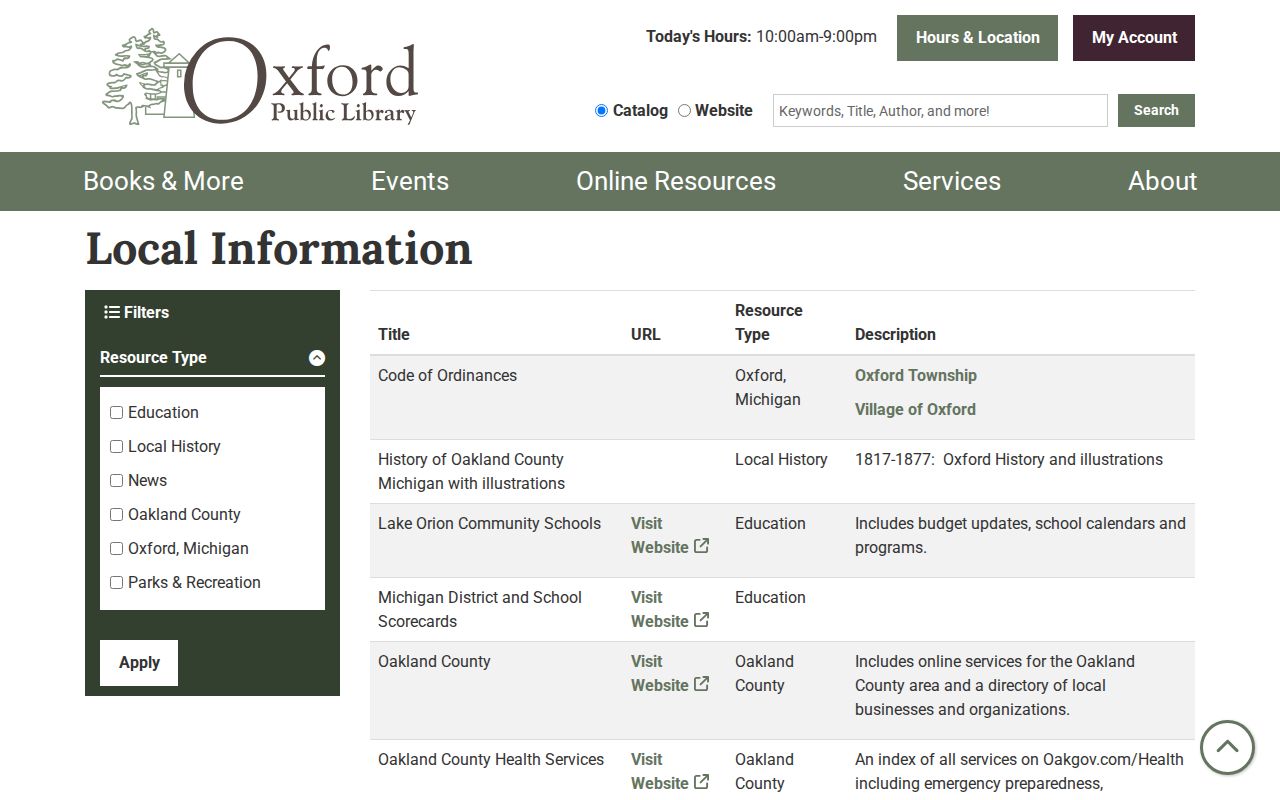
The linked library page is a starting point, not a claim that the library maintains a searchable file for every Oxford address. Pair a library lead with the parcel PIN and legal description, which remain the more stable bridge to a recorded deed and an older map.
Oxford Township Previous Residents in Super Index
The Oakland County Super Index is the official online route for indexed property-record information. Its simple “Search anything” field accepts a personal name, address, or PIN, and relevant keyword filters can appear with results. Search is free. The guide says recording information can appear immediately after recording, while names and legal descriptions may be added later in indexing. A no-result search therefore deserves a second attempt using the PIN, spelling variants, or a later check.
| Document number | Identifies the recorded item and supports later copy or office follow-up. |
|---|---|
| Recording date | Dates the instrument, which can differ from a household’s move date. |
| Grantor and grantee | Names the party transferring an interest and the party receiving it. |
| Legal description | Tests whether the earlier instrument describes the same land despite address changes. |
| Image status | Index data is free; the county treats document images and copies as paid access. |
Open the result, record the parties, date, type, document number, legal description, and any Liber/Page information shown. The detail view places indexed data beside an image thumbnail. Images are fee-based, while the index is free. That split is useful when the goal is to locate the next deed before deciding whether a copy is needed.
Note: A deed party is connected to a recorded transaction, not automatically a complete account of everyone at the parcel.
Oxford Township Previous Residents Before 1964
Oakland County describes online property-record copies dating from January 1, 1964, except subdivision plat maps, while county land holdings reach back to the early 1800s. The online-image boundary is not the beginning of the ownership trail. When the next link is older, shift from the screen to the Register of Deeds, its map and plat materials, the Archives of Michigan, and local library holdings. The county’s in-person or mail grantor-grantee service is the documented name-search fallback and costs $5 per name.
- From the current PIN and legal description, identify the newest deed in Super Index.
- Record the grantor, grantee, recording date, document number, instrument type, and legal description.
- Search the earlier grantor as a grantee, then the earlier grantee as a grantor, while testing the parcel description at every link.
- Stop treating the street string as the sole key when the trail reaches an older document, rural route, or subdivision change.
- For a pre-1964 gap, request a focused office search or inspect the appropriate book, film, plat, archive, or map source.
- Grantor
- The person or entity transferring an interest in a recorded instrument.
- Grantee
- The person or entity receiving that interest. Search roles can reverse as the chain moves back.
- Chain of title
- The sequence of recorded transfers tested against the same parcel or legal description.
- Legal description
- The land description in the record, such as lot, section, plat, or boundary language. It often remains more useful than an old street label.
Oxford Township Previous Residents Between Deeds
Deeds usually identify transaction parties, not every past resident. Use the time between deeds to look for a family or place clue in the Oxford Leader, a census schedule, the 1908 atlas, county officer directories, a cemetery register, or a probate file. The historical collections themselves are described on the Oxford Township city directory page; use them here to test an address, surname, trade, or local institution without assuming that Oxford had a complete household directory.
A practical bridge is: legal description or PIN to deed party, deed party to newspaper or atlas search, then date the result against census and cemetery or probate evidence. The 1908 atlas can supply township plats, patrons, and business context. County officer directories can identify public roles and custodian names. Oxford Leader notices can reveal a move or family event. Each source should keep its own date and relationship label.
Oxford Township Previous Residents Across Census Years
For the household layer, pair a directory-like source or newspaper clue with the nearest available census rather than treating either as a substitute for a deed. Public federal schedules now run through 1950. They are snapshots tied to an enumeration date, and Oxford Township, Village of Oxford, postal, and historic place labels may not line up cleanly. The goal is to test whether the same person, family group, road, or parcel context appears across more than one dated record.
- Write down the exact address, route, parcel description, or township label carried by the earlier source.
- Search the Oxford Leader, atlas, or county directory shelf for the name and date range around that clue.
- Locate the nearest public census schedule and preserve the enumeration date and printed geography.
- Compare surname spellings, family names, trade clues, road names, and nearby land context without forcing a match.
- Use a subsequent deed, newspaper notice, cemetery record, or probate case to explain a possible move or death.
This process is useful for family history, estate questions, and understanding an older Oxford place. It is less reliable when a street number is the only shared detail, because no official master crosswalk for Oxford road changes, numbering changes, boundary shifts, and parcel splits was located.
Oxford Township Previous Residents at Trail’s End
When a person drops out of a parcel or newspaper trail, use event-specific sources rather than guessing. Oakland County’s genealogy search can provide marriage or death leads. Michigan’s Genealogical Death Index is a historical index, not a certified copy. The Oxford Township clerk maintains burial records and grave-site sales for Oxford Township Cemetery, North Oxford Cemetery, and Mt. Pleasant Cemetery, although no public name-searchable interment index was found. Call the clerk or make a narrowly described request for a releasable register, lot card, map, or interment record.
Probate can be relevant to an heir question. MiCOURT may supply a public case-number lead by name depending on category, while Oakland Court Explorer’s Probate search is case-number based. Ask the Probate Court or county clerk about the public register, archived-file location, copy fee, and any restriction before requesting a file. A newspaper notice, cemetery entry, or death index can suggest a next step, but none by itself proves legal succession.
Lawful use. Use Oxford Township past-resident research for family, estate, and local-history questions. Do not use a record to track, harass, or harm a living person.
Oxford Township Previous Residents and Address Continuity
Address continuity is a research question, not an assumption. Older Oxford sources can use township, Village of Oxford, post-village, rural-route, road, section, lot, or boundary language. The research did not locate one official master crosswalk for road renaming, numbering, annexation, or parcel splits. Compare the legal description, plat, owner names, road spelling, and date before treating two address forms as the same place.
Historical aerials and the county’s 1908 atlas can add geography, but neither is a survey or a resident list. The county also notes that its Property Gateway pulls from multiple municipal systems with different update practices. Preserve the map year and source date. Careful comparison protects the earlier trail from being attached to the wrong Oxford Township parcel merely because the modern address looks similar.