
Oxford Township City Directory Holdings
The documented Oxford Township city directory collections are a shelf of related sources, not one continuous household series. The strongest verified holdings are the Oxford Leader newspaper, county officer directories, and a 1908 atlas with patrons and business material. Each answers a different question. The Leader can reveal a family event or move. The county volumes can place a public officer or identify the local office behind a record. The atlas ties names to historical land and place context. No official source reviewed confirmed a complete, stand-alone Polk directory for Oxford Township or a local reverse-directory run.
| Collection | Years | Where held | Access |
|---|---|---|---|
| Oxford Leader | 1898-1902 catalog item; later runs have gaps; 1975-current microfilm survey | DigMichNews, Library of Michigan, Oxford Public Library | Digital search where available; catalog and microfilm review for gaps |
| Oakland County officer directories | 1939-1940; 1940-1941; 1943-1944; 1947-1993 with gaps; 1996-2009 with gaps; 2013-2015; 2020 | Oakland History Center shelf list | Reference and catalog request; officer information, not a household roster |
| Standard atlas of Oakland County | 1908 | University of Michigan digital collection; Register of Deeds Cross Atlas | Open online atlas; county scan by appointment |
| Michigan Memories directories | Varied statewide coverage | Library of Michigan digitization portal | Search by title or name, then verify an Oxford result page |
Those dates are holding clues, not a promise that every issue or year survives. A catalog record, a reel, and a digitized result can each cover different portions of the historical record. Start with the collection that fits the question, then confirm the exact title and date before treating an omission as meaningful.
Oxford Township City Directories and the Leader
The Oxford Public Library Oxford Leader Archives page points researchers to Central Michigan University’s DigMichNews portal. Newspapers fill an important gap beside a city directory because they can mention visits, marriages, deaths, school events, business changes, and moves. Search a surname with “Oxford,” then try the street name, a spouse or parent name, and an occupation or local institution. OCR is imperfect, so browse issues near the event rather than trusting a single no-result search.
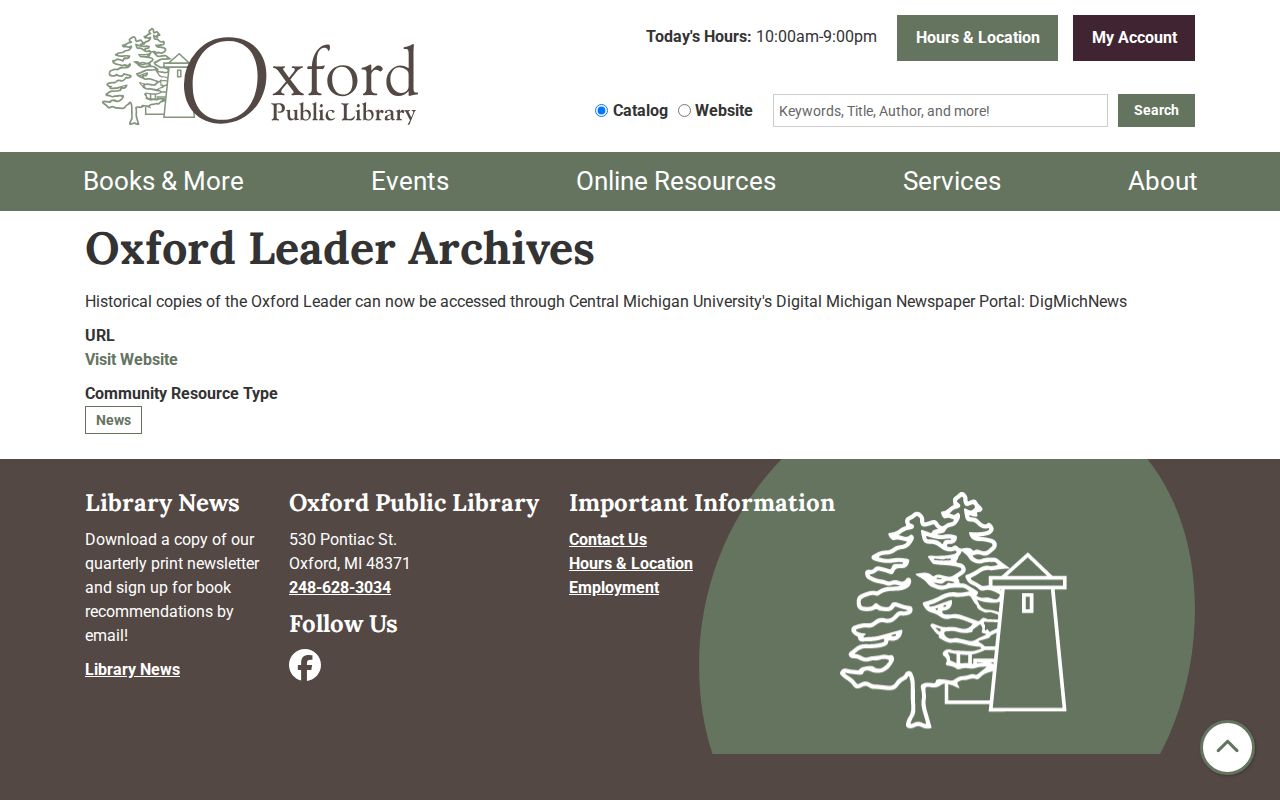
The linked library page is a practical handoff from an online search to the newspaper archive. Oxford Public Library’s local-history survey reports Oxford Leader microfilm from 1975 to the present, available during library hours. The Library of Congress identifies the 1898-1902 weekly title, while Library of Michigan listings supply other periods with gaps. Ask the library to confirm the reel or digital range before a visit.
Note: Newspaper notices can supply a useful lead, but an event notice does not by itself establish a complete household or a legal interest.
Oxford Township City Directory Shelves at Pine Grove
The Oakland History Center shelf list documents a long run of Oakland County county, city, village, and township officer directories. These volumes are especially useful when a directory question is really a custodian question: they can help identify the official title attached to a township or village name in a particular period. They should not be read as proof that every Oxford Township household was listed. The recorded gaps also matter, so preserve the volume year in any research note.
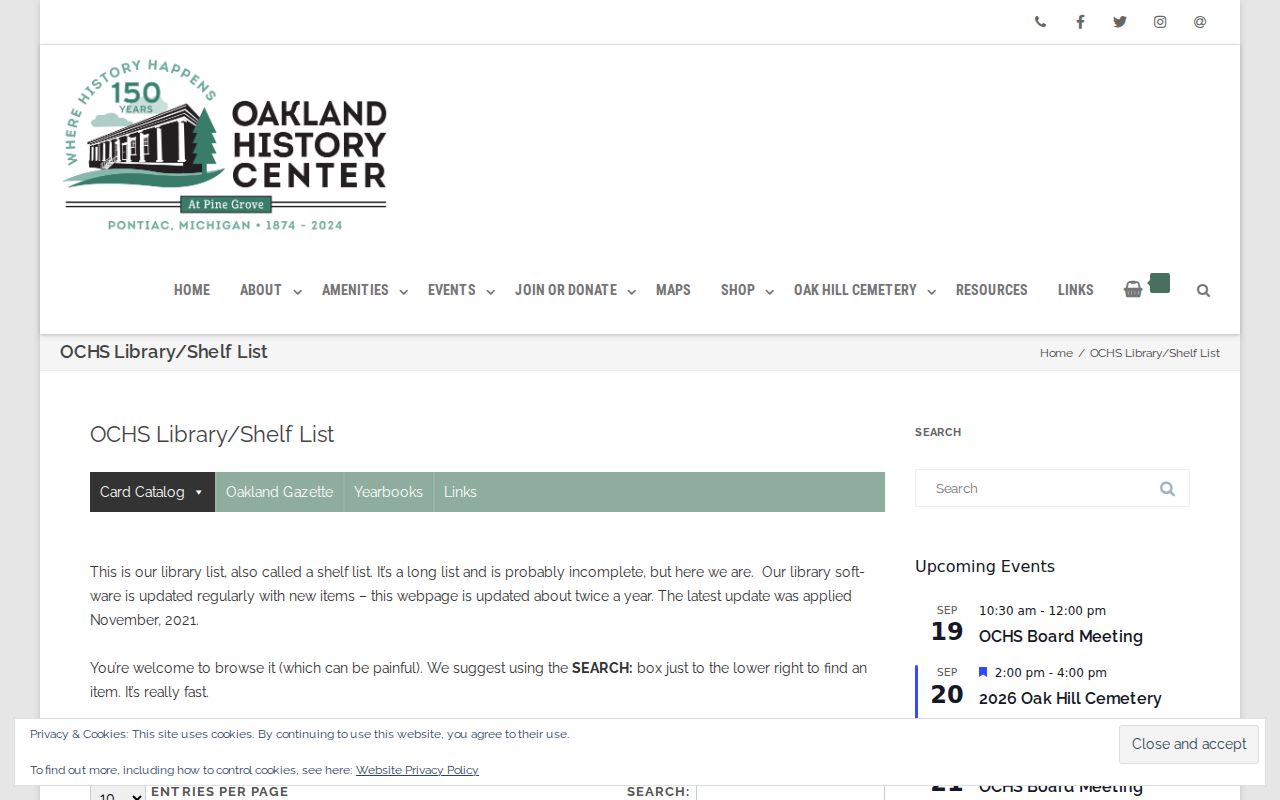
The shelf-list image leads to a physical-collection route when a normal web search stops. Contact the History Center through its published site about access and the exact item. Its county directories, local histories, maps, and cemetery or newspaper references can help bridge a missing digital result without implying that every item is online.
Oxford Township City Directory Clues in 1908
The University of Michigan’s digitized Standard Atlas of Oakland County is a 1908 source with township plats, a patrons directory, and a reference-business directory. It is better for learning how a parcel, road, patron name, or business fitted together at that time than for locating a present address. Oakland County also says its 1908 Cross Atlas was preserved and scanned, with inspection available by appointment through the Register of Deeds.
The Michigan Memories directories portal is a second digital lead. Its coverage is statewide and varied, so a search result must be checked for the correct Oxford and the actual title. The older 1863 Oakland business-directory transcription is another useful clue: it names Oxford as a post village and township, uses route and trade language, and does not offer modern street numbers. That distinction keeps an early business reference from being misread as a modern-style address listing.
The Michigan Memories search surface is a place to locate a candidate digitized title, not evidence that Oxford has a complete digitized directory run. Save the item title, page, date, and repository when an entry is useful enough to compare with an atlas, newspaper, or deed.
Reading Oxford Township City Directory Entries
A city directory entry has to be read as the publisher printed it. A conventional volume may identify a surname, given name or initials, spouse, trade, business, and street address. It may also use short marks for a widow, a boarder, an owner, or an occupant. Oxford does not have a verified local sample page for a reverse directory, and county officer books use a different format. Photograph or transcribe the abbreviation key in the front matter before drawing meaning from a letter.
| Name form | Surname plus given name or initials; compare spelling variants across sources. |
|---|---|
| Family notation | A spouse may appear in parentheses; widow and boarder labels can be abbreviated. |
| Trade or institution | A role, business, or civic institution can separate two people with the same name. |
| Address | A printed street or route is a dated clue and may not match modern numbering. |
| Occupancy mark | Interpret only with that volume’s key; symbols differ by publisher. |
- Criss-cross directory
- An address or street-order directory that starts from a place rather than a surname. No verified Oxford-specific run was found.
- Householder index
- A listing organized around the named person responsible for a household, not necessarily every person at that address.
- Abbreviation key
- The publisher’s explanation of short forms, usually printed in the volume. It is essential for interpreting an entry accurately.
Oxford Township City Directories Across Census Years
Family-history work becomes more reliable when a city directory is treated as one dated observation. Federal census schedules from 1790 through 1950 are public under the 72-year rule, but a census date is not the same as the year a directory gathered its information. The Oxford Township and Village of Oxford labels can also change the apparent place of a household. Preserve the exact printed place, date, and source before connecting records.
- Start with a known name, street, or parcel reference and identify the matching newspaper, atlas, officer directory, or catalog title.
- Record each printed name form, address or route, trade clue, spouse notation, and the source year.
- Compare the next available year instead of assuming that an unverified year is missing from the person’s life.
- Pair the dated clue with the nearest public census schedule, noting the township or village geography printed there.
- Use an Oxford Leader notice, cemetery register, probate lead, or land record to test a move, death, or relationship.
A person disappearing from a local publication can mean a move, a change in listing practice, or a gap in the collection. It does not settle the reason alone. When a historical name needs present-day confirmation, use a separate Oxford Township resident lookup workflow and keep the historical and current records distinct.
Oxford Township City Directory Geography
Oxford is a records-geography problem as much as a name problem. The Charter Township of Oxford and the Village of Oxford are separate local governments, even though both may appear as Oxford in older material. A town, post village, township, postal label, and census place can describe related but different areas. The 1863 business directory’s post-village language and the 1908 atlas’s township plats show why an old place label should be read in its own period.
This distinction is especially useful for a family-history or heir question. A township cemetery register, a village notice, a county deed, and a census line may each use a different geographic label while referring to the same wider Oxford community. Match the legal description, road, township range, or date before merging them. Maps and historical aerials add land context, but they do not identify every person connected with a place.
Oxford Township City Directory Access Routes
When a title is not searchable online, move through the documented access channels. Search the Oxford Public Library catalog and reference desk for Oxford, Oakland County, directory, cemetery, obituary, yearbook, plat, and local history. Confirm microfilm access and whether a neighboring item can be requested through The Library Network. For state or county archival material, use the Archives of Michigan collection guides and ask for the relevant finding aid rather than assuming a catalog entry has a scanned page.
The township clerk is the documented local route for cemetery records and township materials, while the Register of Deeds holds land records and the library preserves local newspaper access. This split explains why a failed online directory search should lead to a call, catalog request, microfilm review, archive finding aid, or a narrowly described records request. It also keeps a historical city-directory search tied to the office that actually holds the record.
Note: Exact Oxford household-directory years and a local reverse-directory run were not verified, so confirm a title and its access conditions before traveling or ordering copies.